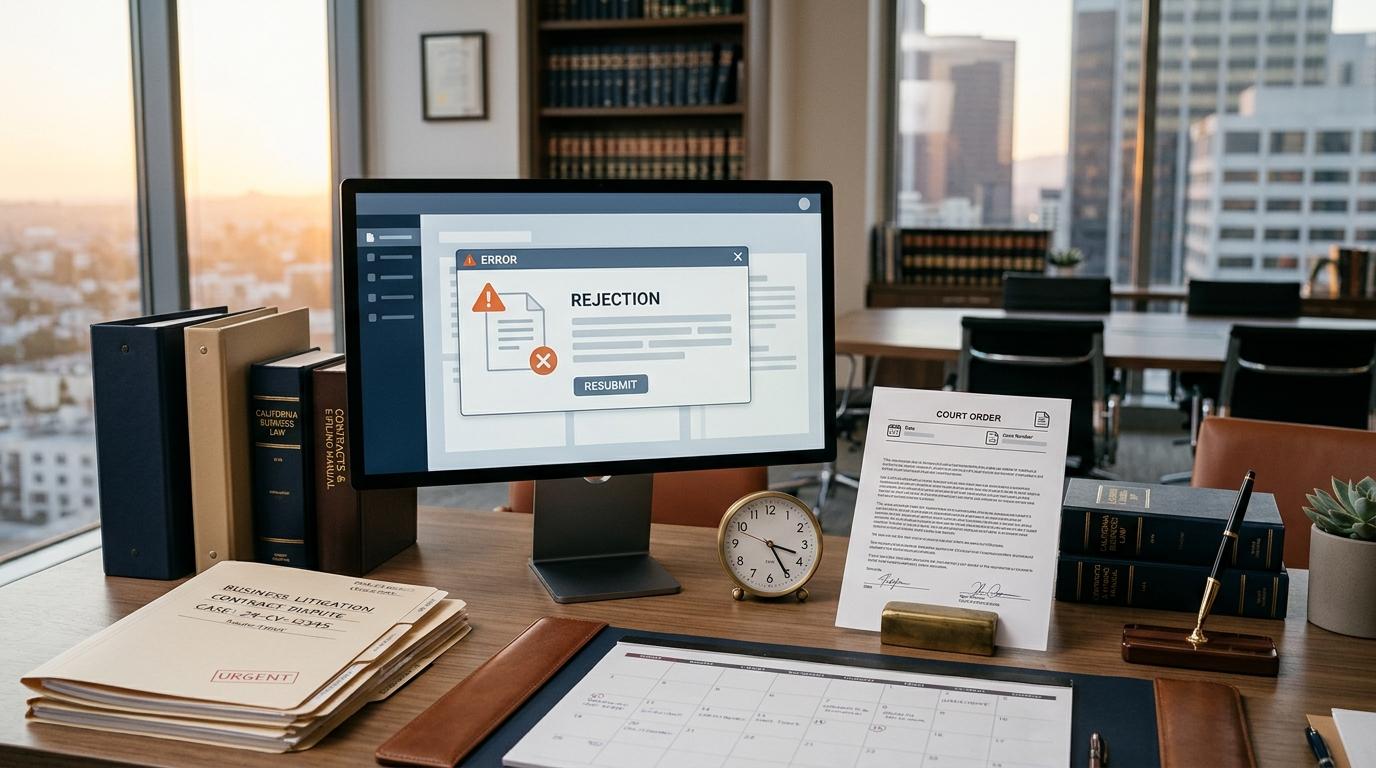
The notice arrives by email: your filing has been rejected. The deadline is today, or tomorrow, or already past. Your stomach drops. This is a common scenario for paralegals, legal operations teams, and self-represented litigants, and the right response is usually calm, methodical, and fast.
This guide offers a recovery protocol. Rules vary by court and by the kind of rejection, so always read the court's rules and notices and confirm key points with counsel.
Step one: read the rejection reason carefully
Clerks and filing systems usually state why a filing was rejected. Typical reasons include the wrong document type, missing or incorrect case information, an unsearchable or corrupted PDF, a missing signature, an incorrect filing fee, a missing required form or companion document, or an attachment that exceeds size limits. Identify exactly what is being said and whether the problem is technical or substantive. A technical problem can usually be fixed in minutes.
Step two: identify the deadline and your safety margin
Determine the actual deadline and how much time is left. Is it a statutory deadline, a court-ordered date, a hearing-related deadline, or a contractual one? Some deadlines can be extended by agreement or by court order, and others cannot. If there is time, fix and resubmit promptly. If there is not, move to the protective steps below at the same time.
Step three: correct the deficiency
Match the fix to the reason:
- Wrong document type or event: Resubmit under the correct category, checking the court's list.
- PDF problems: Regenerate the PDF from the source file, confirm that text is searchable, and reduce file size or split the exhibits if needed.
- Missing signature or form: Add the signature or required form, and double-check that every required companion document is included.
- Case information errors: Verify the case number, party names, and court or department against the docket or the court's notices.
- Fee issues: Confirm the fee amount or submit a fee waiver request where applicable.
Before resubmitting, run through your pre-filing checklist again. A second rejection for a different error is a common and avoidable setback.
Step four: document the timeline
Save the original submission confirmation, the rejection notice with its time stamp, and every step you took afterward. If the filing's timeliness is later questioned, a clear record showing when you first submitted, why it was rejected, and how quickly you cured it will be valuable.
Step five: consider the rules on timeliness and relief
Courts have rules about when a filing is considered filed and about relief from technical problems. In California state court, rules and statutes address the time an electronic filing is deemed received, and provide mechanisms to seek relief if a filing was late because of technical failures or a rejection that was later found to be improper. Federal rules provide that a clerk should not refuse a document solely because it does not comply with formatting requirements, and also allow motions to extend time for good cause or excusable neglect, though courts decide these case by case. Do not assume relief will be granted. Treat it as a fallback, not a plan.
Step six: act on parallel tracks if time is short
When a deadline is imminent:
- Contact the clerk's office to ask about alternatives, such as filing in person or by another approved method, and about how they will treat the original submission.
- Notify opposing counsel and consider requesting a stipulation to extend time where appropriate.
- Prepare a short motion or application for relief explaining the circumstances, ready to file immediately if needed.
- Involve your attorney so decisions about relief and deadlines are made with full legal context.
Step seven: learn from the rejection
After the immediate issue is resolved, review what went wrong. Update your checklist, add an extra review step for high-stakes filings, and set internal deadlines that give you at least one full business day before the court's deadline.
Most rejections are fixable. The ones that turn into serious problems are usually those discovered too late.
Facing a rejection right now? Get Emergency E-Filing Assistance from our office.
This article is general information, not legal advice, and does not create an attorney-client relationship. Consult a licensed attorney about your specific situation.